Boiled Egg Diet: Does It Work?

The boiled egg diet is a short-term, restrictive diet that emphasizes boiled eggs alongside foods such as vegetables, fruit, lean protein, and sometimes low-carbohydrate foods. It has become popular online because eggs are relatively filling and provide protein, but there is no strong evidence that a special “boiled egg diet” is necessary for weight loss.
Eggs can certainly be part of a healthy weight-loss eating pattern. However, sustainable weight loss depends on the overall diet, calorie intake, physical activity, sleep, and other individual factors—not simply eating boiled eggs. The CDC notes that gradual weight loss of about 1–2 pounds per week is more likely to be maintained than faster weight loss.
What Is the Boiled Egg Diet?
The boiled egg diet is generally promoted as a short-term eating plan built around several servings of eggs each day.
There isn’t one official version. Online versions can differ substantially, but a typical plan may include:
- Boiled eggs
- Lean chicken or fish
- Non-starchy vegetables
- Citrus or other fruit
- Low-carbohydrate foods
- Water, coffee, or unsweetened tea
Some versions dramatically restrict grains, legumes, dairy, starchy vegetables, sweets, and other foods.
The idea is simple: eat fewer calories while emphasizing protein-rich foods and limiting calorie-dense foods.
That can potentially lead to weight loss, but the effect does not mean that boiled eggs themselves burn body fat.
Does the Boiled Egg Diet Work for Weight Loss?
It can produce short-term weight loss if the eating pattern causes you to consume fewer calories than your body uses.
The important distinction is that the calorie deficit—not the boiled egg itself—is the primary driver of weight loss.
Eggs may make a diet easier to follow for some people because they provide protein and can be satisfying. A large egg contains about 6 grams of protein and roughly 78 calories, according to the American Heart Association.
Research specifically examining whole eggs and body weight is not strong enough to establish that an egg-based diet is superior to other approaches. A systematic review and meta-analysis of 32 controlled clinical trials found that evidence on whole eggs and body weight or body composition was mixed, rather than demonstrating a special weight-loss effect from eggs.
In other words, eggs can fit into a weight-loss diet, but they are not a magic weight-loss food.
Why Eggs Can Fit Into a Weight-Loss Diet
Eggs have several characteristics that make them useful in balanced meals.
1. They provide protein
Protein is an important part of a balanced diet and can help make meals more satisfying.
Combining eggs with vegetables, whole grains, or fruit can create a more nutritionally complete meal than eating eggs alone.
2. They are relatively low in calories
A large egg contains around 78 calories.
That makes boiled eggs convenient for breakfast, salads, sandwiches, and snacks without automatically adding a large amount of energy to a meal.
3. They provide several nutrients
Eggs provide nutrients including choline and vitamin D, as well as lutein and zeaxanthin in the yolk.
However, this doesn’t mean that eating large quantities of eggs is better. Nutritional variety still matters.
What Can You Eat on the Egg Diet?
A more balanced interpretation of the egg diet can include the following foods.
Protein
- Eggs
- Chicken
- Turkey
- Fish
- Seafood
- Beans and lentils
- Tofu and other soy foods
- Plain yogurt or other suitable dairy products
Vegetables
Aim for variety rather than relying on one vegetable.
Good choices include:
- Spinach
- Broccoli
- Cauliflower
- Tomatoes
- Cucumbers
- Peppers
- Mushrooms
- Green beans
- Carrots
- Leafy greens
Fruit
Whole fruit can provide fiber, vitamins, minerals, and natural sweetness.
Examples include:
- Apples
- Oranges
- Berries
- Grapefruit
- Kiwi
- Pears
Healthy carbohydrate sources
There’s no nutritional reason to eliminate all carbohydrates simply because you’re trying to lose weight.
Depending on your needs, useful choices include:
- Oatmeal
- Brown rice
- Quinoa
- Potatoes
- Sweet potatoes
- Whole-grain bread
The NIDDK recommends a sustainable eating plan that includes vegetables, whole fruits, whole grains, lean proteins, eggs, seafood, beans, nuts, seeds, and other nutrient-rich foods.
7-Day Boiled Egg Diet Plan
Rather than following an extremely restrictive viral diet, use the following as a balanced seven-day example.
Day 1
Breakfast: 2 boiled eggs, berries, and whole-grain toast
Lunch: Grilled chicken salad with leafy greens, cucumber, tomato, and olive oil
Snack: Apple and a small handful of nuts
Dinner: Baked salmon, broccoli, and roasted sweet potato
Day 2
Breakfast: 2 boiled eggs, spinach, and whole-grain toast
Lunch: Tuna and vegetable salad with lemon dressing
Snack: Plain Greek yogurt with berries
Dinner: Grilled chicken, roasted vegetables, and brown rice
Day 3
Breakfast: Boiled egg with oatmeal, blueberries, and cinnamon
Lunch: Egg and avocado salad with mixed greens
Snack: Orange and a few almonds
Dinner: Baked white fish, green beans, and potatoes
Day 4
Breakfast: 2 boiled eggs, tomato, and whole-grain toast
Lunch: Lentil and vegetable soup with a side salad
Snack: Plain yogurt and fruit
Dinner: Chicken breast with roasted cauliflower and quinoa
Day 5
Breakfast: Vegetable omelet with one or two eggs and fruit
Lunch: Salmon salad with mixed greens and avocado
Snack: Pear and nuts
Dinner: Turkey, roasted vegetables, and a small serving of brown rice
Day 6
Breakfast: 2 boiled eggs, fruit, and whole-grain toast
Lunch: Chicken and vegetable bowl with quinoa
Snack: Greek yogurt with berries
Dinner: Grilled fish, asparagus, and roasted sweet potato
Day 7
Breakfast: Boiled eggs, avocado, tomato, and whole-grain toast
Lunch: Large mixed salad with chicken or chickpeas
Snack: Fruit and a small handful of nuts
Dinner: Vegetable and bean bowl with brown rice and a protein source
This approach keeps eggs in the diet without making them the only meaningful food.
Foods to Limit or Avoid
If your goal is weight loss, you don’t necessarily need an absolute “forbidden foods” list.
Instead, consider limiting foods that can make it difficult to maintain an appropriate calorie intake, particularly:
- Sugary drinks
- Large amounts of sweets
- Highly processed snack foods
- Frequent fried foods
- Processed meats
- Large portions of refined carbohydrates
- Foods high in added sugar
- Excessively calorie-dense sauces and dressings
The goal should be to improve the overall quality of your eating pattern rather than create an unsustainable list of forbidden foods.
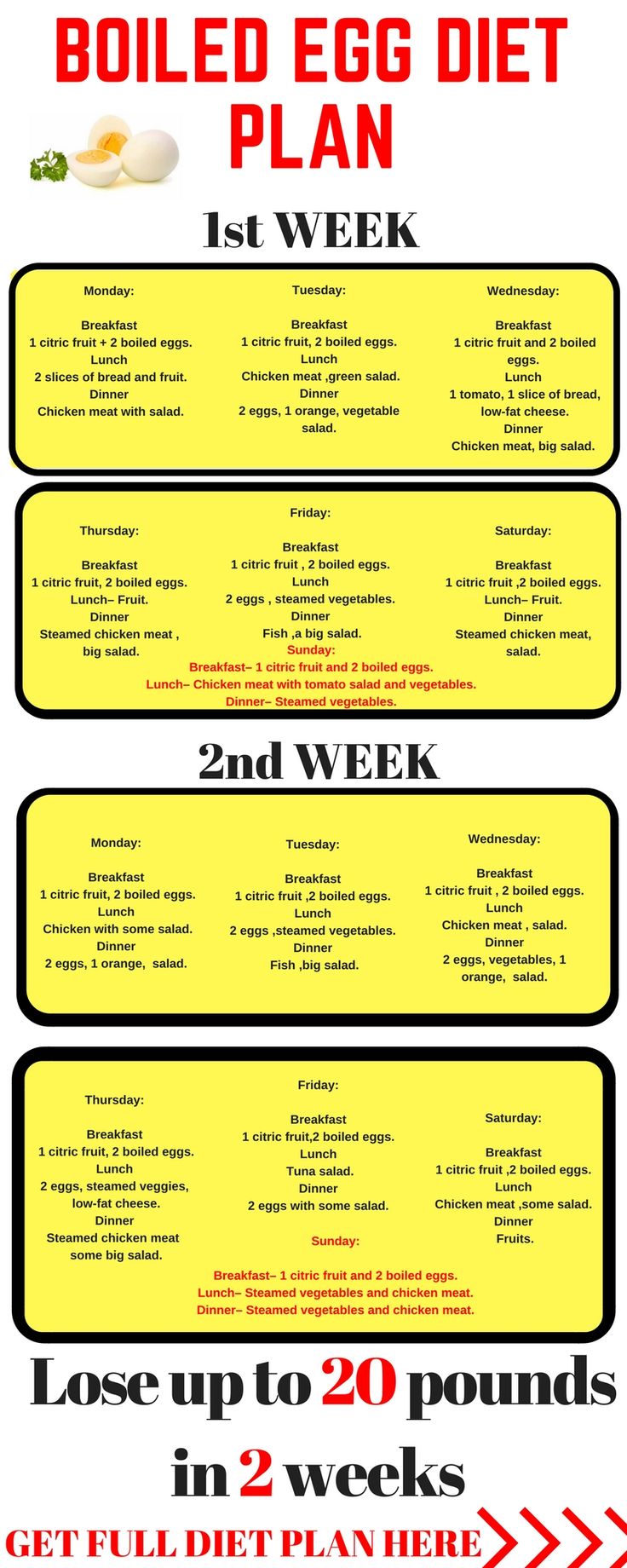
Can You Lose 20 Pounds in 2 Weeks?
This is one of the biggest claims associated with viral egg-diet plans, but it should not be treated as a realistic promise.
The CDC describes gradual weight loss of approximately 1–2 pounds per week as a pace that is more likely to be maintained.
A dramatic change on the scale during the first days of a restrictive diet can also reflect changes in water and glycogen stores rather than an equivalent amount of body-fat loss.
Your starting weight, calorie intake, activity level, medications, medical conditions, sleep, hormones, and other factors can influence how quickly your weight changes.
Therefore, claims such as “lose 20 pounds in two weeks” should not be used as a guaranteed outcome or a target.
Benefits of the Boiled Egg Diet
There are some practical advantages to the concept, particularly when it is modified into a balanced diet.
Simple meal preparation
Boiled eggs are inexpensive, portable, and easy to prepare in advance.
Protein-rich meals
Eggs can make breakfast or lunch more protein-rich without requiring complicated recipes.
Encourages vegetables
Many versions of the diet pair eggs with vegetables. That’s a useful habit to retain.
May reduce highly processed foods
A structured plan can encourage people to replace frequent snacks, sweets, and fast food with simpler meals.
However, these benefits aren’t exclusive to an egg diet. You can get the same advantages from many other balanced eating patterns.
Risks and Downsides of the Egg Diet
The biggest problem is restriction.
A diet centered too heavily on eggs can crowd out foods that provide fiber and other nutrients.
Potential concerns include:
Lack of dietary variety
Eating the same foods repeatedly can make it harder to obtain a broad range of nutrients and can make the diet difficult to maintain.
Too little fiber
If vegetables, fruit, legumes, and whole grains are heavily restricted, fiber intake may fall.
Hunger and cravings
A very restrictive diet can be difficult to sustain, potentially leading to overeating after the diet ends.
Weight regain
A temporary diet may produce temporary results if the underlying eating habits do not change.
Excessive dietary cholesterol for some people
Eggs contain dietary cholesterol. A large egg contains around 186–200 mg, depending on the source and preparation.
Current cardiovascular guidance focuses less on a simple dietary-cholesterol number and more on the overall eating pattern, saturated fat intake, and individual cardiovascular risk. The American Heart Association’s 2026 guidance emphasizes vegetables, fruits, whole grains, healthy protein sources, unsaturated fats, minimally processed foods, and limiting saturated fat and added sugar.
People with high LDL cholesterol or certain medical conditions should discuss their egg intake with their healthcare professional rather than automatically following a high-egg diet.
Who Should Be Careful With This Diet?
A restrictive diet deserves extra caution if you:
- Have high cholesterol or cardiovascular disease
- Have diabetes
- Are pregnant or breastfeeding
- Have a history of an eating disorder
- Have kidney or other chronic health conditions
- Take medications affected by major dietary changes
- Are under 18
- Have significant nutritional deficiencies
If you have a medical condition or take medication, ask your doctor or registered dietitian before starting a restrictive weight-loss plan.
A Healthier Alternative to the Egg Diet
Instead of asking, “How many eggs can I eat to lose weight?”, a better question is:
“How can I build meals that are filling, nutritious, and sustainable?”
A simple formula is:
Protein + vegetables or fruit + high-fiber carbohydrate + healthy fat
For example:
Breakfast: Eggs + whole-grain toast + berries
Lunch: Chicken + large salad + brown rice + olive oil
Snack: Greek yogurt + fruit
Dinner: Fish + roasted vegetables + sweet potato
This style of eating is much easier to continue after the first week.
The NIDDK similarly emphasizes a healthy eating pattern that can be maintained over time, combined with regular physical activity.
For adults without medical limitations, its guidance also points to at least 150 minutes of moderate-intensity aerobic activity per week plus muscle-strengthening activities on two or more days per week.
Boiled Egg Diet FAQs
Is the boiled egg diet good for weight loss?
It may lead to short-term weight loss if it reduces overall calorie intake, but there is no good evidence that a boiled-egg diet is uniquely effective. Eggs can be part of a balanced weight-loss diet without being the central food.
How many boiled eggs should I eat a day?
There is no universal number that is appropriate for everyone. Healthy people can include eggs in a balanced diet, but individual needs differ. The American Heart Association has historically described up to one whole egg per day as reasonable for healthy individuals, with additional considerations for people with dyslipidemia, diabetes, or other cardiovascular risks.
Can I eat eggs every day?
For many healthy people, eggs can fit into an overall healthy eating pattern. What you eat alongside the eggs also matters. Vegetables, whole grains, fruit, legumes, nuts, and other protein sources provide nutritional variety.
Can I lose 20 pounds in two weeks with boiled eggs?
You should not expect or target a 20-pound loss in two weeks. The CDC recommends gradual weight loss of about 1–2 pounds per week for people pursuing weight loss.
Can I eat bread on an egg diet?
Yes. There is no general need to eliminate bread to lose weight. Choosing a whole-grain bread and keeping portions appropriate can fit into a balanced diet.
Can I eat fruit on the boiled egg diet?
Yes. Whole fruit can be an excellent addition because it provides fiber and micronutrients. Apples, berries, oranges, pears, and other whole fruits can complement an egg-based breakfast.
Are boiled eggs better than fried eggs for weight loss?
Boiling does not make eggs inherently fat-burning. However, boiled eggs can be easier to include in a lower-calorie meal because they don’t require added cooking fat.
What happens when you stop the egg diet?
If you return to previous eating habits after a highly restrictive diet, weight may return. A better strategy is to use the seven-day plan as a starting point for building eating habits you can continue long term.
Conclusion
The boiled egg diet can work in the narrow sense that a restrictive eating plan may reduce calorie intake and produce short-term weight loss. But eggs are not a special fat-burning food, and there is no compelling reason to build an entire diet around them.
A better approach is to keep the useful part of the idea—simple, protein-rich meals—and remove the unnecessary restriction.
Include eggs alongside vegetables, fruit, whole grains, legumes, fish, lean proteins, nuts, seeds, and healthy fats. Combine that eating pattern with regular physical activity, adequate sleep, and habits you can maintain.
Most importantly, don’t let viral claims such as “lose 20 pounds in 2 weeks” define your expectations. Sustainable weight management is a long-term process, and gradual progress is generally more realistic than extreme dieting.