Protein Balls vs Eggs: Which Is the Better High-Protein Snack?

Protein Balls vs Eggs: Which Is Better?
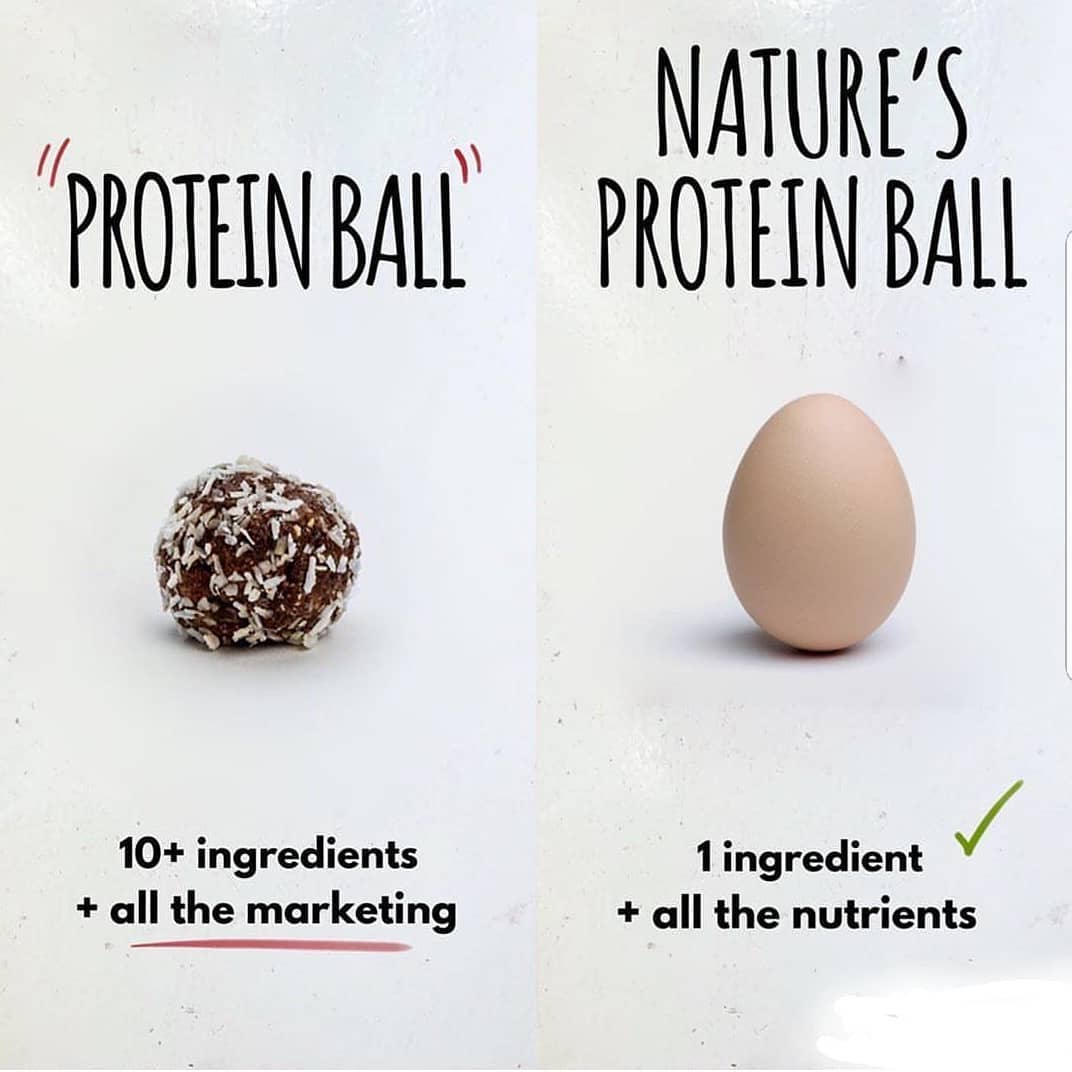
The image contrasts a commercial-style “protein ball” with an egg, suggesting that eggs are the superior protein source because they contain only one ingredient. While this is a catchy message, the reality is more nuanced.
Comparison at a Glance
| Feature | Protein Ball | Egg |
|---|---|---|
| Ingredients | Usually 8–15 ingredients | 1 ingredient |
| Protein Quality | Depends on recipe | Excellent (complete protein) |
| Protein | 4–12 g each | About 6–7 g per large egg |
| Calories | 80–250 kcal | About 70–80 kcal |
| Added Sugar | Often present | None |
| Fiber | Usually yes | None |
| Healthy Fats | Depends on ingredients | Yes |
| Convenience | Ready to eat | Requires cooking (unless pre-boiled) |
Eggs: Nature’s High-Quality Protein
Eggs are considered one of the highest-quality protein sources because they contain all nine essential amino acids in ideal proportions.
Benefits include:
- Complete protein
- Rich in vitamin B12
- Excellent source of choline
- Contains vitamin D
- Naturally low in carbohydrates
- Highly satiating
A large egg provides approximately:
- 70–80 calories
- 6–7 g protein
- 5 g fat
- Less than 1 g carbohydrate
Are Protein Balls Healthy?
It depends on the ingredients.
Homemade protein balls
Often contain:
- Oats
- Nuts
- Seeds
- Peanut or almond butter
- Dates
- Cocoa
- Protein powder
These provide:
- Fiber
- Healthy fats
- Micronutrients
- Sustained energy
Commercial protein balls
Some products may contain:
- Added sugars
- Syrups
- Artificial sweeteners
- Preservatives
- Flavorings
- Vegetable oils
Always check the ingredient list and nutrition label, as quality varies widely between brands.
Which Is Better?
Choose eggs if you want:
- Maximum protein quality
- Fewer calories
- No added sugar
- A minimally processed food
- A filling, savory snack
Choose protein balls if you want:
- A portable snack
- More fiber
- A sweet alternative
- Longer-lasting energy before exercise
Dukan Diet Compatibility
| Dukan Phase | Eggs | Protein Balls |
|---|---|---|
| Attack | ✅ Allowed | ❌ Generally not allowed |
| Cruise | ✅ Allowed | ❌ Most recipes not allowed |
| Consolidation | ✅ Allowed | ⚠️ Only if ingredients comply with phase rules |
| Stabilization | ✅ Allowed | ✅ In moderation |
Most traditional protein balls contain oats, dates, nuts, dried fruit, or nut butters, making them unsuitable for the Attack and Cruise phases. However, Dukan-friendly versions can be made using approved ingredients such as oat bran (within the daily allowance), fat-free dairy, and protein powder.
Frequently Asked Questions
Are eggs the best natural protein source?
Eggs are among the best natural protein sources due to their complete amino acid profile, though lean meats, fish, dairy, and soy are also excellent options.
Are protein balls good for weight loss?
They can be, but portion size matters. Some protein balls are calorie-dense because they contain nuts, seeds, and dried fruit.
Which keeps you fuller?
Eggs generally provide greater satiety per calorie because of their high-quality protein and lower energy density.
Can I eat eggs every day?
For most healthy people, moderate egg consumption can be part of a balanced diet. Individual dietary needs and medical conditions should be considered.
Are homemade protein balls healthier?
Often yes, because you control the ingredients and can reduce added sugars or unnecessary additives.
Conclusion
The image makes a simple point: an egg is a minimally processed, nutrient-rich food with high-quality protein. That is true. However, protein balls are not inherently unhealthy. A well-made homemade protein ball can provide fiber, healthy fats, and convenient energy, while an egg offers superior protein quality with fewer ingredients and calories. Rather than viewing one as universally “better,” choose the option that best fits your nutritional goals, activity level, and overall eating pattern.