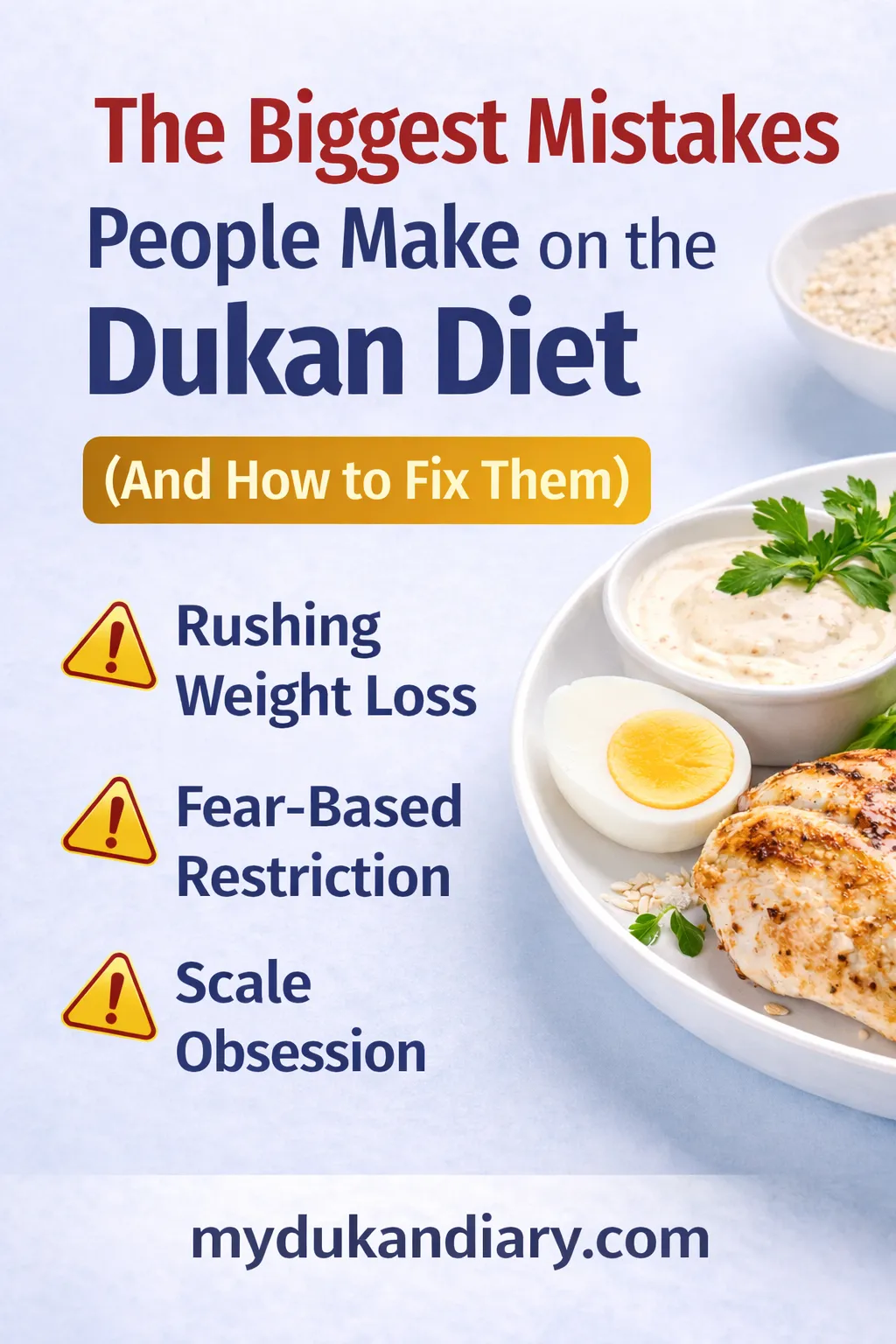
The Biggest Mistakes People Make on the Dukan Diet (And How to Fix Them)
The Dukan Diet can be incredibly effective — but only when it’s done correctly.
Many people start with high hopes, follow the rules strictly, and still find themselves frustrated, stuck, or exhausted.
In most cases, the problem isn’t the diet itself.
It’s the mistakes people unknowingly make while following it.
Below are the most common mistakes people make on the Dukan Diet — and more importantly, how to fix them so the diet actually works with your body, not against it.
Mistake #1: Treating the Dukan Diet Like a Crash Diet
One of the biggest misconceptions about the Dukan Diet is viewing it as a short-term crash diet.
Many people:
- Rush through phases
- Undereat to “speed up” weight loss
- Ignore hunger cues
This approach may lead to quick scale changes, but it almost always results in burnout, stalls, or rebound weight gain.
Why This Is a Problem
The Dukan Diet is structured, not extreme. Each phase exists for a reason. Skipping steps or forcing rapid results puts unnecessary stress on your body and metabolism.
What to Do Instead
- Follow each phase as intended
- Eat enough protein to feel satisfied
- Focus on consistency, not speed
Sustainable progress always beats fast progress.
Mistake #2: Cutting Out Allowed Foods Out of Fear
Many people restrict beyond the rules of the Dukan Diet.
They avoid:
- Oat bran
- Dairy
- Certain proteins
Not because they’re forbidden — but because of fear.
Why This Is a Problem
Over-restriction increases stress, food obsession, and the likelihood of bingeing later. It also makes the diet feel harder than it needs to be.
What to Do Instead
- Trust the allowed food lists
- Use permitted foods strategically
- Eat variety within the rules
Restriction does not equal discipline. Confidence does.
Mistake #3: Obsessing Over the Scale
The scale is one of the most misleading tools during the Dukan Diet.
Weight can fluctuate due to:
- Water retention
- Digestion
- Hormones
- Sodium intake
Yet many people judge their entire progress based on a single number.
Why This Is a Problem
Scale obsession creates unnecessary stress and often leads people to abandon a plan that’s actually working.
What to Do Instead
- Track how clothes fit
- Notice energy and hunger levels
- Look for weekly trends, not daily numbers
Progress isn’t linear — and that’s normal.
Mistake #4: Ignoring Hunger Signals
Some dieters believe hunger is something to “push through.”
They:
- Delay meals
- Drink water to suppress hunger
- Avoid eating late even when hungry
Why This Is a Problem
Hunger is not a weakness. It’s a biological signal. Ignoring it often leads to overeating later or feeling completely out of control around food.
What to Do Instead
- Eat when you’re hungry
- Choose allowed foods that truly satisfy
- Stop trying to “outsmart” your body
Your body is not your enemy — it’s your guide.
Mistake #5: Staying Too Long in One Phase
Many people get stuck, especially in the Cruise Phase.
They fear:
- Moving forward
- Reintroducing foods
- Losing control
So they stay in one phase far longer than necessary.
Why This Is a Problem
The Dukan Diet is meant to evolve. Staying stuck increases frustration and makes long-term adherence harder.
What to Do Instead
- Progress through phases as designed
- Trust the structure of the diet
- Focus on sustainability, not perfection
The goal is a lifestyle — not endless restriction.
Why These Mistakes Are So Common
Most of these mistakes don’t come from laziness or lack of discipline.
They come from diet culture, fear of weight gain, and misinformation.
Many people believe that:
- More restriction = better results
- Hunger should be ignored
- Control equals success
But in reality, these beliefs work against you.
Final Thoughts: How to Make the Dukan Diet Actually Work
The Dukan Diet doesn’t fail people.
People fail because they try to make it harsher than it needs to be.
When done correctly:
- You eat enough
- You respect hunger
- You trust the structure
- You allow flexibility within the rules
Weight loss becomes calmer, more predictable, and far more sustainable.